Author’s Note: The course of study this year for our weekly[1] Sunday school is the Hebrew Bible, (aka, the Old Testament). In a fit of bad judgment, the local leaders of my church asked me to share a few thoughts each week on the chapters and verses scheduled for study and discussion on the Sabbath. I will publish the first installment of this series the evening of Friday, May 7 (Saturday May 8, at the latest).
There is a manual for this class, a PDF of which can be obtained, free of charge, here. Reviewing the weekly lesson in the manual is not essential to understanding my essays.
Given the size of the Old Testament and the comparatively small number of Sundays in a calendar year, I will only scratch the surface of the assigned lesson material. (With rare exception, I will limit each essay to 1,000 words or less.)
As a preface to this project, I thought I should explain my methodology—my mindset, if you will—when reading ancient texts.
* * * * * * *
“The past is a foreign country: they do things differently there.”
—L. P. Hartley, The Go Between, (New York, New York: New York Review of Books, 2002), p. 17.
The first sentence of L. P. Hartley’s novel, The Go Between, carries with it an implicit warning: think twice before you project the culture, values and beliefs of your society on those of past civilizations. Any student of the Hebrew Bible and New Testament who fails to abide by this admonition—who neglects to acquaint himself with the customs, traditions, way of life and beliefs of the ancients—will (i) miss much of what these ancient texts have to teach, and (ii) make frequent and egregious interpretative errors.
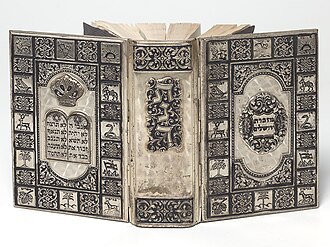
So, how can we avoid misreading the Bible through the eyes of a 21st century American? Here are a few suggestions.
1. Begin by asking yourself, “What am I reading?” In the broadest sense, the Old Testament is not a book; rather, it is an anthology of several different books written and edited by multiple authors over several centuries. Further, those authors rarely wrote history, at least history as we generally understand it. Instead, they employed a variety of different genres to convey their thoughts and ideas. And always remember this: not one of them thought they were writing anything which, in the future, would be called “canonical scripture.”
In the Old Testament, you will find poetry, ritual instructions, satire, proverbs, history, legal texts, psalms of thanksgiving and lament, and myths.[2] For fundamentalists, the word “myth” is a four-letter. Their preferred approach to the Bible is scriptural literalism, i.e., if the Bible says some pathetic excuse for a prophet resided in the belly of a giant fish for three days, then, by golly, that’s what happened. That’s not my approach.
We moderns have a very narrow conception of truth—or I should say, the means by which a proposition is validated. In our world, the veracity of a hypothesis is proven by rigorous historical research, double-blind studies, scientific experiments that can be replicated, and surveys of representative samples of the population. In other words, FACTS. These methodologies, however, were largely foreign to the ancients.
2. Don’t read the Old Testament with an eye toward validating some element of your faith.
In other words, don’t try to Mormonize, Catholicize, [insert name of any faith] the Bible. Instead, accept it on its own terms. And when you stumble upon dissonant voices, inconsistencies, and contradictions, be thankful. These are not “bugs” in the system; they are features.[3]
3. We are a “high-context society” whereas the authors of the Bible inhabited a “low-context society.”
What do I mean by this? Well, consider this brief passage from William Golding’s Lord of the Flies:
“The three boys walked briskly on the sand. The tide was low and there was a strip of weed-strewn beach that was almost as firm as a road. A kind of glamour was spread over them and the scene and they were conscious of the glamour and made happy by it.”[4]
Note how the author sets the scene, describing in detail the physical elements of the scene and the mood of three boys. He does this for a variety of reasons, e.g., to help us understand the personalities of each character, among other things. You won’t find anything like this in the Bible. But why?
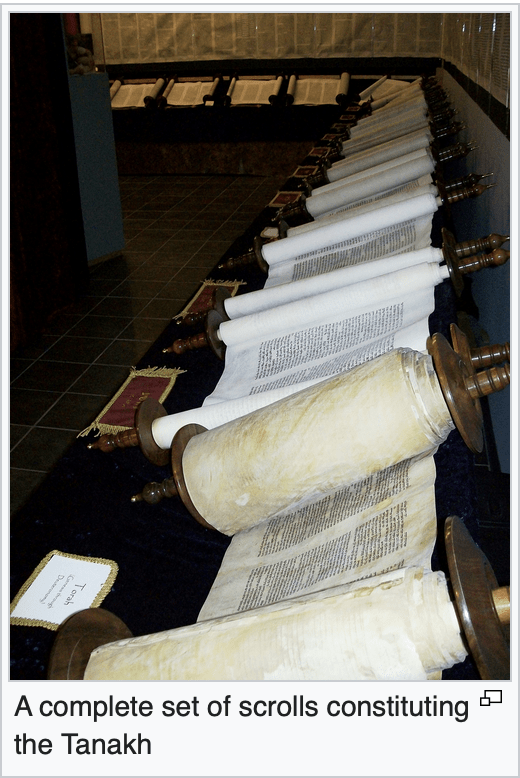
The authors of the Tanakh[1] were not writing for us; rather, their contemporaries were their target audience. They assumed their readers were acquainted with the context of these stories, and the prevailing political dynamics, culture and norms. Besides, they didn’t have word processors and the physical act of writing was laborious and time consuming—so much so that they omitted all vowels from the text!
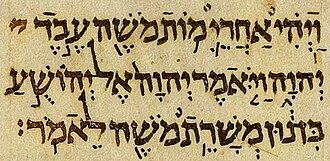
This lack of context, along with the omission of vowels, compounds the difficulty of understanding the meaning of these ancient texts. But guess what? This was intentional.
4. The Power of Ambiguity.
In reality, the vowels (nekudot) in ancient Hebrew were not omitted from the Old Testament; rather, were passed down—first from God to Moses on Mount Siani from leader to leader as part of the Oral Torah.
We crave answers, the simpler the better. Cognitive dissonance makes our heads hurt. Not so the denizens of the Hebrew Bible. The ambiguity we assiduously try to avoid was mana from heaven for the ancient Israelites. It allowed them to derive multiple layers of meaning from the same text[2] and to argue endlessly about which is better. I love it!
5. Our culture places greatest emphasis on the individual while the Israelites inhabited a communal world where family, clan, and community were preeminent.
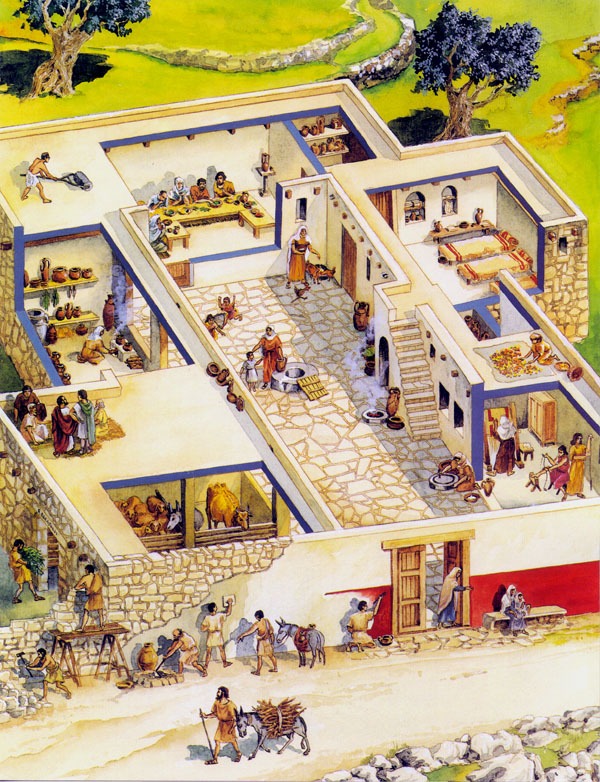
Ancient societies were communitarian not just for cultural reasons, but as a matter of survival. In the first century B.C., a twenty-something living in Jericho didn’t have the option of leaving home and traveling to the big city (Jerusalem) to make his way in the world. If he even attempted such a trip by himself, he likely would be set upon by thieves and perhaps killed.
Moreover, in ancient times, your advancement in the world invariably required the backing of a patron. But this was never an act of charity. In exchange for his support, you were expected to publicly praise your patron, express gratitude for his help, and remain loyal to him. If you acted unethically, your behavior would bring shame not only upon you but also your family and impair—if not outright destroy—your future prospects. The greatest and most important patron of all, of course, was God.
6. We often describe ancient Israel’s culture as “patriarchal.” That is a mistake.
I believe “heterarchy,”—i.e., shared, gender-distinct roles —is a more apt description of Israelite culture. Women, for example, inhabited and controlled two of the most sacred spaces: (1) a soul’s birth, and (2) and his transition from this life to the next. And the Hebrew Bible never speaks ill of women, (except for one random verse of Ecclesiastes). Because they lacked power and influence in the community, women often employed cunning and guile to get what they wanted. And they were praised for doing so!
7. Don’t read the stories in the Bible in a vacuum; rather, consider what came before and what comes next.
By way of example, Job’s forceful objection to God’s injustice stands in stark contrast to Abraham’s silent acquiescence to God’s plan to kill an innocent boy. Also, why did Abraham contest God’s plan to destroy the innocent along with the guilty in Sodom and Gomorrah and then subsequently raise no objection to the sacrifice of his son, Isaac?
8. If you lack a good working knowledge of the Hebrew Bible, you will fail to grasp much of the New Testament.
Do you know that story, from the second chapter of Matthew, about King Herod seeking to massacre all children aged two or under in order to eliminate a perceived threat to his throne? And do you remember how Mary and Joseph took the Christ child to Egypt and then returned once they had received the “all-clear” signal?
Now, can you think of a story in the Old Testament where a wicked pharaoh sought to kill an infant who his soothsayers warned him would be a future threat to his empire, who failed in that endeavor with the result that this infant, as a grown man, led his people out of Egypt to the promised land? I bet if you don your deer-stalker hat and puzzle and puzzle until your puzzler is sore, you can perceive a connection between these two stories.
* * * * * * *
The Old Testament chapters in the “Come Follow Me Manual” slated for study this week and next are all found in the Book of Numbers. As noted above, Friday evening (May 8, 2026,), I will share a few brief thoughts about a story or two from this book and then will do likewise the following Friday. Provided no one slashes the tires on my Corvette, I will continue to share my scribblings on the subsequent books in the Old Testament.
If you have any questions about, or disagree with, my scriptural interpretations, please feel free to share your thoughts. Thanks.
[1] “Tanakh is a Hebrew acronym for the three sections of the Hebrew Bible: (1) Torah (Law), (2) Nevi’im (Prophets), and (3) and Ketuvim (Writings).
[2] Ramaban (Nahmanides), Commentary on the Torah, (Lawrence, New York: Judaica Press, 2005), Introduction.
[1] Yes, I know—it’s currently bi-weekly; but it will become weekly in a few months.
[2] Christine Hayes, Introduction to the Bible, (New Haven, Connecticut: Yale University Press, 2012), p. 6.
[3] Ibid.
[4] William Golding, The Lord of the Flies, (New York, New York: Penguins Books, 2013), p. 23.
Interesting and thought-provoking so far; thx for sharing this.
Can we have pix of the Corvette? (asking for a friend)
Your talents were underutilized in your chosen profession, Eric. No one with your erudition or ability to convey ideas should have spent any of his valuable time perusing the Internal Revenue Code.