Around 1:30 a.m. on June 28, 1973, I received a phone call from a young woman—Sister Crawford was her name—who I had met for the first time just a few months ago.
She was calling me from a small city in southern Chile: Talca (population circa 100,000). But this did not strike me as odd since that is where I first made her acquaintance. Indeed, I would have been surprised if she had been calling from anywhere else since both of us were in Chile serving proselytizing missions for the Mormon Church. I, at the time, was in the nation’s capital: Santiago. But what was odd was the time of day of, and the reason for, her call. But I’m getting ahead of my story.
* * * * * * * *
I volunteered to serve a mission for the church at the end of my freshman year in college. I was nineteen and had never set foot outside the United States, save for a couple of fishing trips to Canada. Then (and now) you had no choice where the church sent you on your mission, though you were allowed to express a preference. I simply wanted to go abroad. And I got my wish.
After completing eight weeks of immersive language training on the campus of Brigham Young University, I was thrown on a plane—along with five other newbie missionaries—and sent to Chile.
* * * * * * * *
Before we return to my late-night phone chat with Sister Crawford, and for the benefit of my non-LDS readers, I should explain the nomenclature and protocols which apply to all Mormon missionaries.
First, male missionaries are addressed as “Elder,” female missionaries as “Sister,” followed by their surname (e.g.,“Elder Facer;” “Sister Crawford”). Also, Elders serve in the mission field for two years; Sisters, eighteen months.
Second, the “Chief Executive Officer” of every mission is the Mission President who, along with his wife, are the only adults in the room. Their term of office, for mental health reasons, is limited to three years. The name of my Mission President was Royden J. Glade. He was accompanied by his beautiful wife and two adorable daughters. They became like family to me when I worked and lived at Mission Headquarters for about six months as one of President Glade’s Assistants.
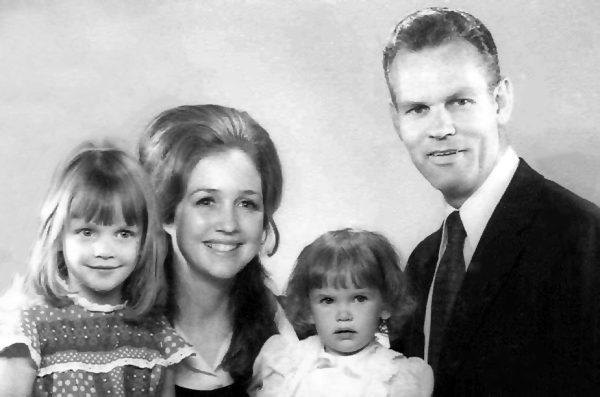
And the last time I checked, they are still alive.
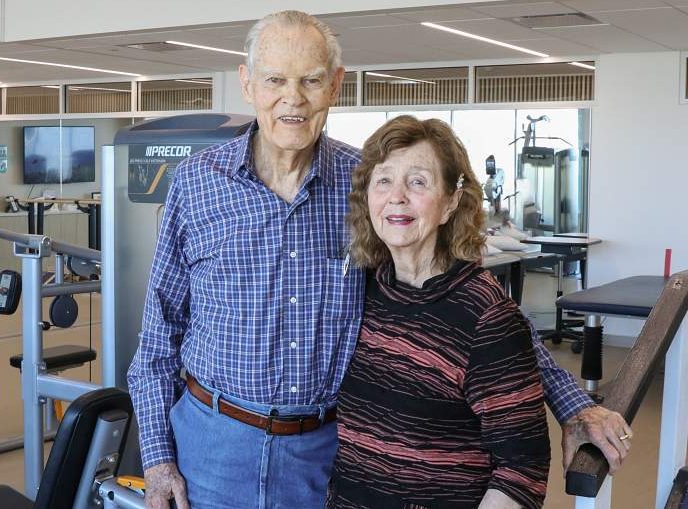
Third, when I served my mission in Chile, each missionary spent around five to six months in one location before being transferred to another. For example, I started my mission in Linares, a small town about 30 minutes south of Talca. I had been there for about three or four months when Sister Crawford arrived in Talca. About eight weeks later I was transferred to Santiago, but not before making her acquaintance. The missionaries in Linares (two Elders) and those in Talca (four Elders, two Sisters) were part of the same District. Periodically we met to discuss mission and, on our weekly day off, socialize, e.g., play basketball, ride horses, break bread, etc.
Fourth, every missionary is assigned a companion of the same gender in whose company they must always be present (except for toilet stuff, transfers, etc.) Your companion will change when you are—or he/she is—transferred to a new district. But you will always have one. Also, whoever has been in the mission field the longest will typically be the “senior companion,” i.e., the person who has the final say on what you do each day and how you do it.
* * * * * * * *
When the matron of the pensión (i.e., boarding house) awakened me in the wee hours of the morning of June 28, 1973, to tell me I had phone call, she was none too happy.
Upon picking up the receiver I said, “This is Elder Facer.” Whereupon Sister Crawford, replied: “Elder I need your help. And you’re the only person I know in Santiago. I have been trying to reach President Glade for the last hour, but no one answers the phone. So, I need you to go to the mission home, wake him up, and have him call me right away. This is an emergency.”
“Sister Crawford,” I asked, “what’s wrong? What has happened?” To which she replied: “I can’t tell you. All I can tell you is that this is very serious and I’m in desperate need of President Glade’s help.”
(Long pause.)
“Are you sure this can’t wait until morning?” I asked.
“I am positive!” she said, with a thinly-veiled hint of desperation, exasperation, and impatience.
(Another long pause.)
“Okay. This better be good,” I said. To which she replied, “No, Elder, it is anything but good. And thank you.” Then the line went dead.
There were several reasons why my companion and I were not keen on finding our way in the middle of the night to the Mission Home, which was located in the Las Condes neighborhood of Santiago, about seven miles away. At the top of that list was the distinct possibility we might be arrested. Or shot.
* * * * * * * *
Chile was disintegrating. The Marxist-Socialist government of Salvador Allende, in less than three years, had destroyed the economic and social fabric of the country. The deficits resulting from his government’s economic policies were financed by unprecedented expansions of the money supply which rivaled those of the Weimar Republic. Inflation, on a six-month annualized measure, was above 1,500%.[1] The socialist leaders of other South American countries implemented similar policies, but Allende’s were by far the most radical.[2]
Allende responded to these developments with agrarian expropriations and draconian price controls which, naturally, created shortages and black markets. Also, many of the hundreds of once-profitable companies Allende had nationalized went bankrupt, leaving their workers unemployed.[3] Unsurprisingly, the people were both hungry and angry. And they let you know it.
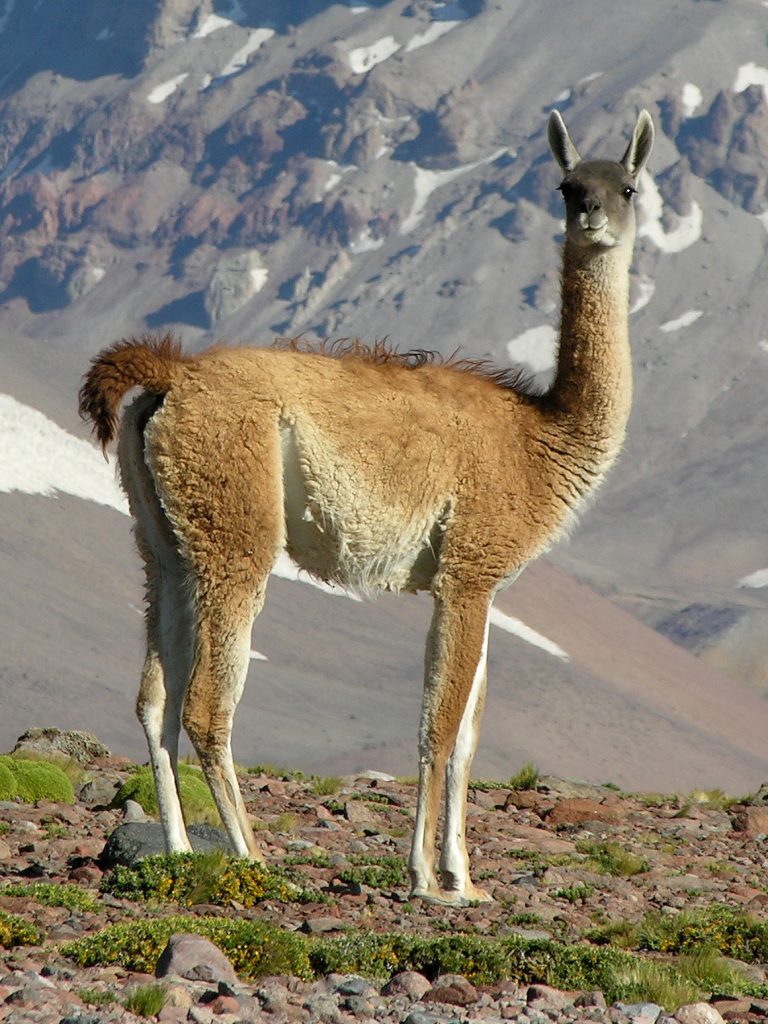
The social unrest and violent demonstrations were daily occurrences during the first year of my mission, even in towns as small as Linares (pop. 30,000). You never left the house without a handkerchief to cover your eyes, nose and mouth, since tear gas had a tendency to linger for days. And nothing tests the strength of one’s sphincter like rounding a street corner only to find yourself staring at the business end of a guanaco.
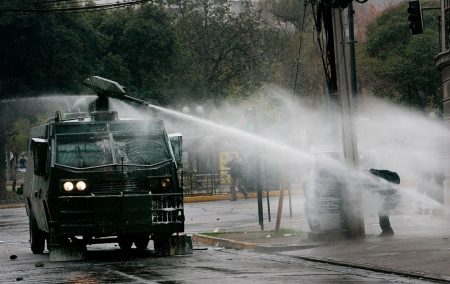
In Santiago, during the previous week alone, there had been attacks on foreign embassies and the offices of political parties, numerous violent confrontations between the government, opposition groups and the military, along with multiple labor strikes. And about ten hours before Sister Crawford called me, General Carlos Prats, the Commander in Chief of the Chilean Army and the Minister of the Interior, created a huge scandal when he fired his pistol at a civilian vehicle in Las Condes—the very neighborhood where we were about to venture—because the driver had insulted him![4]
In this atmosphere, there were random curfews, troop deployments, restrictions on movement in certain neighborhoods and growing fears of military intervention (those fears were confirmed the day after Sister Crawford called me when elements of an armored regiment of the Chilean Army tried to overthrow the government in what came to be known as El Tanquetazo, “the tank putsch”).[5]
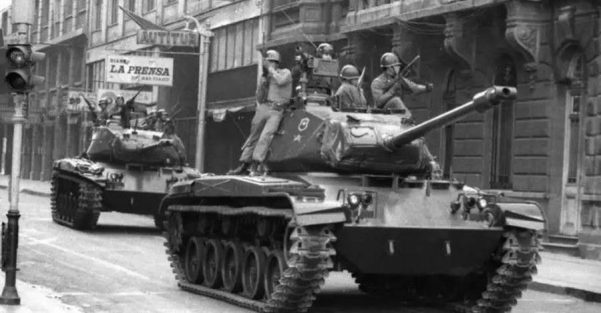
And, in the eyes of Allende’s supporters, we very conspicuous Americans had bullseyes on our backs since the United States had opposed Allende’s election and was not-so-secretly trying to undermine his government (though Allende was pretty much self-destructing on his own).
* * * * * * * *
The foregoing notwithstanding, my companion and I, convinced of our own immortality, ventured forth, found an idle cab driver, and offered him a handsome sum to take us to the Mission Home. But gaining admission to the residence at two in the morning was no easy task since this expansive home was surrounded by an eight-foot tall wrought-iron fence with spiked tops.
Yes, there was a gate—locked, of course—equipped with a doorbell, but no one answered, presumably because everyone was fast asleep. We pressed the damn thing so many times that we broke it. So, someone had to scale the wrought-iron fence. And that someone turned out to be me (I lost a quick game of rock, paper, scissors).

After pounding on the front door and shouting a few times, we succeeded in rousing the residents, and were granted admission. President Glade, wearing pajamas and a bathrobe, inquired as to the reason for our visit. I told him about my call from Sister Crawford, whereupon he invited us into his office. We were motioned to the two chairs in front of his desk, I provided him with the phone number where Sister Crawford could be reached, and he placed the call.
Royden J. Glade is the paragon of equanimity and inscrutability. He is the most even-tempered man I have ever known, apart from, perhaps, my father. Throughout his phone call with Sister Crawford, he asked only three or four questions, listened intently to her responses, gave a few instructions, thanked her for talking with him, and said goodbye. Then, for what seemed liked the longest time, he said nothing. He was lost in thought and seemingly oblivious to our presence. It was as if he was physically stunned by what he had just been told.
Finally, I had to ask the only question that was on our minds, “President Glade, did we do the right thing by coming here tonight?!?” Somewhat startled by the realization that we were still there, he sat up, looked at us and said, “Yes, Elders, you did. Thank you.”
The next morning, President Glade made a series of phone calls to Sister Crawford and several others to enlist their assistance with a situation without precedent, I suspect, in the lore of Mormon missionaries.
* * * * * * * *
Sister Crawford had been in the mission field only three or four months when she was transferred to Talca, so she was still struggling with the language. But this transfer would be a baptism by fire in many respects. For starters, her companion … excuse me … her senior companion was Chilean and spoke no English.
In a letter she penned to her older sister, Carolyn, on June 27, 1973, Sister Crawford recounted how she had grown to love her new companion, though it had been tough sledding—for both of them—during the first few weeks. After three months together, she said, her companion was being transferred to another city, though that transfer was delayed because her replacement was ill and not able to travel.
Coincidentally, Sister Crawford’s current companion had also taken ill, which was a huge disappointment since the members, and the four Elders in Talca, had planned a “going-away party” for her that evening. “I hope that I don’t get her illness,” she told her sister, “because I couldn’t stand being couped up in this house by myself.”[6]
In a subsequent letter to her parents, posted three days later, Sister Crawford’s mood had darkened. Her companion’s health had taken a turn for the worse, which Sister Crawford suspected was the result of food poisoning since they had eaten “some weird food the day before.” Her condition deteriorated to the point where Sister Crawford felt she had no choice but to call a physician.
The doctor’s examination of Sister Crawford’s companion—who I will henceforth call “Sister Garcia” (a pseudonym)—lasted no more than three minutes. When he returned to the living room, he instructed the lady of the house to call an ambulance pronto, and then informed Sister Crawford that her companion was about to become a mother. “She almost had the baby in the ambulance,” Sister Crawford wrote. “We were only in the hospital five minutes when they told us she’d had a baby girl.”[7]
* * * * * * * *
Sister Crawford was mortified. Her feelings of betrayal were only surpassed by her embarrassment at not having seen what was right in front of her. She was mocked by her fellow missionaries—which said more about them, in my opinion, than it did about Sister Crawford.
But upon further reflection, she remembered how Sister Garcia was careful to never undress or change clothes in her presence. And she always wore ponchos, and other loose-fitting clothing. Also, Sister Garcia was her senior companion in whom she was expected to trust and defer. I would also add that, thanks to seminal work of behavioral psychologists such as Daniel Kahneman, we now know that our minds approach every environment with preconceived expectations. Intense focusing on a task in a highly regulated environment, such as a Mormon mission, can make you blind to stimuli that would ordinarily capture your attention.[8]
In a subsequent phone conversation the next morning with President Glade, she apologized for not having noticed that Sister Garcia was with child, but he cut her off in mid-sentence and said, “Listen, I had a private interview with her a month ago to see how she was progressing and I missed it and never sensed that anything was amiss. So don’t beat yourself up simply because she was adept at deceiving others.”
I think I saw Sister Crawford one more time during my mission—probably at a Zone Conference or some other gathering. When my mission ended in September of 1974, I returned home and resumed my studies at Brigham Young University.
* * * * * * * *
As I was leaving one of my political science classes in February of 1975, a young lady who I had been sitting next to engaged me in conversation. When I mentioned I had recently returned from serving a mission in Chile, she stopped and asked, “Did you ever meet a Sister Crawford on your mission?” I replied, “Why, yes. Do you know her?”
I realized immediately that my question was a stupid one. As did she. And we both laughed. But at this juncture we had entered The Harris Fine Arts Center, and her gaze had wandered towards a small group of students sitting on a bench. Then, she suddenly stopped and said to me, “Oh, by the way, she’s sitting over there.” I awkwardly said goodbye and made a beeline for Sister Crawford.
Her first name is Margaret, by the way. I called her that evening and asked her out. (Of course, she said yes.) But for that chance encounter on a college campus populated with over 25,000 students, we likely would never have become reacquainted.
Fifty years ago today, on April 28, 1976, we were married in the Salt Lake Temple. President Glade and his wife, Rebecca, favored us with their presence at the wedding luncheon. And Rebecca brought tears to the eyes of every mother at the table when she sang, “Sunrise, Sunset.”
Best damn decision I ever made in my life.


But of all God’s miracles large and small
The most miraculous one of all
Is the one I thought could never be
God has given you to me
Epilogue: Answers to Two of Your Questions
1. “In which Chilean mission did Margaret and you serve?” Folks, there was only one mission for the entire country in 1973.
2. “Whatever happened to Sister Garcia?” Lots of things.
The morning after our trek to the Mission Home in Las Condes, President Glade contacted Sister Garcia’s parents, who by then were aware of what had transpired. He instructed them to retrieve their daughter from the hospital in Talca and take her home. She was subsequently excommunicated, which was a source of great embarrassment to the family since they were the scions of Mormondom in Chile.
Sister Garcia contacted the father of her child, but he wanted nothing to do with her and refused to offer any support for the child. The baby was conceived, by the way, while Sister Garcia was on her mission, but obviously well before she became Margaret’s companion.
Remember that rule about always being in the company of your missionary companion? Well, on the day of her transgression, Sister Garcia feigned an illness but told her companion to join the Elders in their proselyting, saying “I’ll be fine.” But shortly after her companion’s departure, a young man in whom she had taken an interest joined her in bed. Perhaps this was destined to occur. After all, she was living at the time in a coastal city in southern Chile called Concepcíon.
Sister Garcia did eventually turn her life around. She was rebaptized, and married a nice Mormon boy in the Santiago temple. Lastly—and please forgive my absentmindedness—I forgot to tell you the name Sister Garcia chose for her baby girl. But you already knew it was “Margaret,” didn’t you?
[1] Sebastian Edwards, “Inflation and the Corruption of /currency in Latin America: Chile, 1970-1973,” The Journal of Policy History, (Cambridge University Press, November 22, 2024), https://www.cambridge.org/core/journals/journal-of-policy-history/article/inflation-and-the-corruption-of-currency-in-latin-america-chile-19701973/4A1C4951B23274E12345A16557FCAD7Clast viewed on April 27, 2026.
[2] Alvaro Vargas Llosa, Liberty for Latin America, (New York, New York: Farrar, Strauss and Giroux, 2005), p. 138.
[3] “The Socialist-Populist Chilean Experience, 1970-1973, by F. Larraín and P. Meller, in The Macroeconomics of Populism in Latin America, (R. Dornbusch & S. Edwards, eds., (Chicago, Illinois: University of Chicago Press), pp. 175-223.
[4] “Alejandrina Cox Incident,” WikipediA, https://en.wikipedia.org/wiki/Alejandrina_Cox_incident last viewed on April 27, 2026.
[5] Agathe Demarolle, “1973 Chilean coup d’état,”Britanica, https://www.britannica.com/event/1973-Chilean-coup-d-etat last accessed on April 28, 2026. A military faction headed by Lieut. Col. Roberto Souper circled La Moneda, the presidential palace, and fired at the building from their tanks. On Allende’s orders, Gen. Carlos Prats—the same man who fired his gun at a civilian in Las Condes just two days before, stopped the rebel forces. Although Prats succeeded, it was at the expense of his standing within the military. He was perceived as too loyal to Allende and lost the popular support of the army, and Gen. Augusto Pinochet succeeded him in late August 1973.
[6] Letter from Sister Crawford to her sister, Carolyn, June 27, 1973 (original in author’s possession).
[7] Letter from Sister Crawford to her parents, June 30, 1973 (original in author’s possession).
[8] Daniel Kahneman, Thinking Fast and Slow, (New York, New York: Farrar, Straus and Giroux, 2011), p. 23.
Wow! What a story!
I do love that Sister Crawford and those photos! Thanks for sharing.
A very nice essay. Fifty years already? I remember that wedding luncheon although I don’t specifically remember President Glade. Congrats to you and Margaret.
I have heard parts of this story but it is still amazing. And, Margaret Facer is a one of a kind loving, spiritual, giving person. You choose a wonderful woman for your eternal companion.
Hi Eric and Margaret,
What a fantastic story. Like Karen, I had heard portions of it before, but now I can read it over and over (and with my memory problems, that is a good thing!). A few minutes before I saw your a email, I told Mike, “ I want to call Margaret today.” But I decided to look at my emails for the past day or two first. I’m glad I did!!!
Thanks again for this great story.
Love to you both!
Judy
PS Mike has to check something for my phone so I might call from an unfamiliar phone number…🫤
I love this. Even though I knew the broad outlines of the story, I had no idea the details were so scary.
Coincidentally, just last night I saw a clip by a young comedian who served her mission in El Salvador during their civil war, which was even more brutal than Chile’s.
https://www.instagram.com/reel/DXyxXNPPkm_/?igsh=azFweWhwd291d2F6
I am very jealous of the amazing opportunity that the Church offers its youth through the missions. We Methodists had nothing remotely like that – although our Sunday School class did once go on an overnight squirrel hunting trip.
NOTE: I know nothing about this comedian, but I see from Google that she has now left the Church. Sometimes ex-Mormons can be unfairly critical so I am not recommending the body of her work, but this clip is gently funny
You two are my favorite love story
Well, some of the details in this story are wrong. I know as I am the daughter of this “Sister Garcia”. No I’m not Margaret.
Sister Garcia has a background that was not known until very few years ago when she was able to open up. She was sexually abused as a child. She was raised by her mother who separated from her drunk husband when she was a little girl and so for the mom to be able to work she left her with an uncle who abused her constantly. The baby mentioned was conceived during the mission, but it was not a result of a love interest. She was raped by a man who didn’t give two cents about her. Imagine her situation. For years suffering abuse with no one to believe or help her and with the stigmas of the day where men can do no wrong… She should have said something, even to the mission president but she blamed herself. She had caused this horrible act. It was her fault. She deserved what she got. Yes she was excommunicated. And she raised the child.
Fast forward about 7 years. She met an amazing man. Not a member of the church. They were married, they did not marry in the temple. They had a daughter together (me). When I was about 5 years old, my mother was re baptized into the church. My sister and I both grew up in the church. Fast forward many, many years. We now live in Utah. Both my sister and I (although at separate times) came to study at Brigham Young University where we met our eternal companions. Yes they are both American. My sister has 4 children and I have 5. We both have children who have/are serving their own missions. We are strong active members of the church.
Sister Garcia is also still a very active and faithful member of the church. She talks about Margaret Crawford with much love.
I’m sure this was a horrible situation for everyone involved, but please don’t think for a second that Sister Garcia did it all on purpose and to deceive. She was naive, made wrong decisions. But she turned her life around and has a beautiful family.
She was sealed to her husband about 24 years ago in the Salt Lake Temple. The same day my sister and I were sealed to them.